

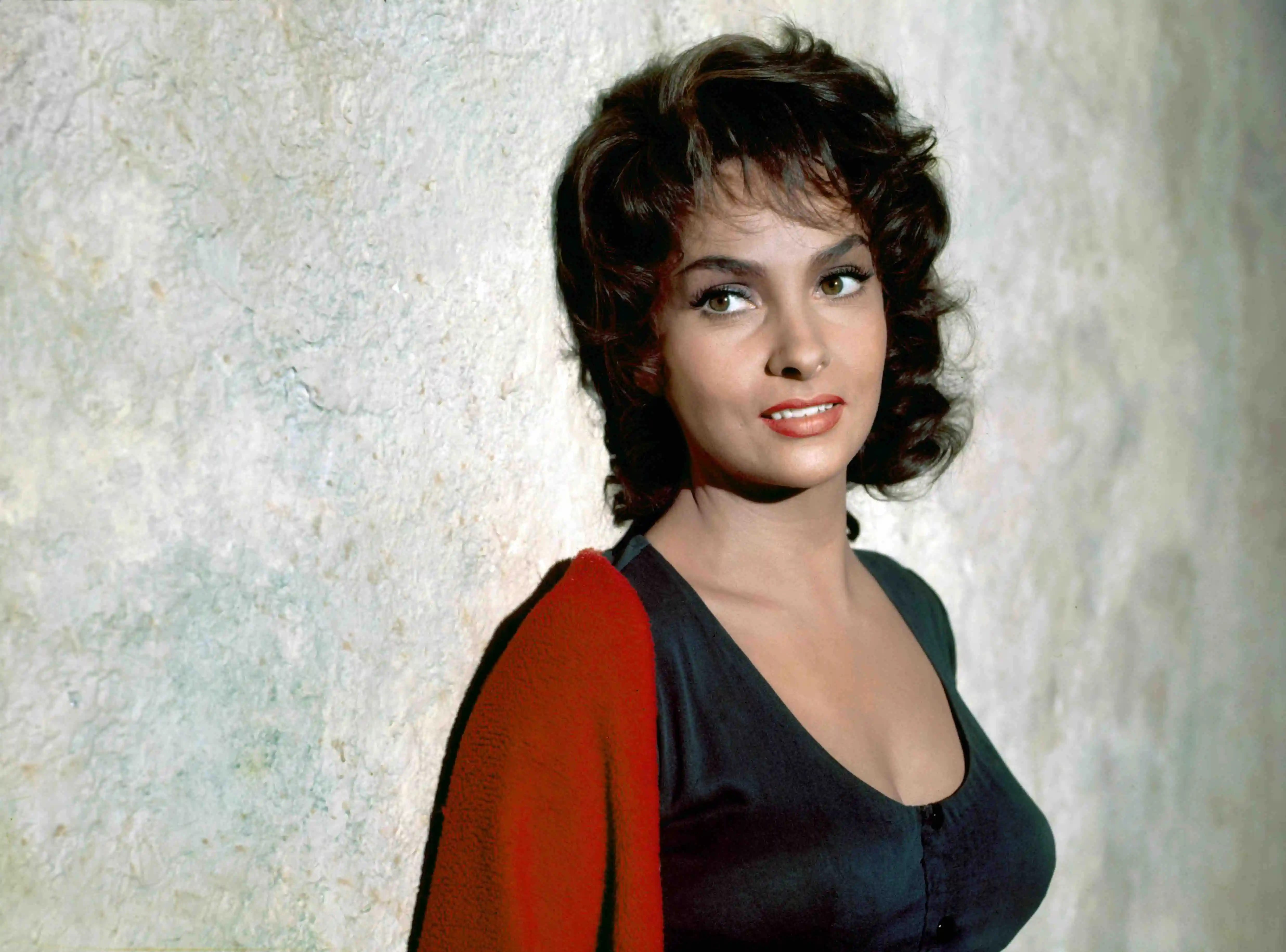
Hollywood’s most powerful predator trapped her with a contract designed to end her career, so she found the loopholes, built an empire he couldn’t touch, and outlived him by 47 years.
Howard Hughes, billionaire producer, aviation pioneer, and one of Hollywood’s most notorious predators, saw a photograph of Italian actress Gina Lollobrigida.
He decided he had to have her.
At 44, Hughes controlled RKO Pictures and had a well-documented pattern: sign beautiful women to restrictive contracts, pursue them romantically, and if they refused his advances, destroy their careers through legal warfare.
He invited 23-year-old Gina to Hollywood for a “screen test,” promising tickets for her and her husband, Milko Škofič, a Yugoslavian physician she’d married in 1949.
Only one ticket arrived.
Gina came to Hollywood alone. And for three months, Hughes deployed the full arsenal of his power.
English lessons. Luxury parties. Expensive gifts. Introductions to the most powerful people in America. The complete Hollywood seduction machine aimed at a young woman from a small Italian town who barely spoke English.
Then Hughes made his ultimate offer:
He’d divorce his wife. Marry Gina. Give her millions, furs, jewels, and stardom beyond imagination.
She just had to divorce her husband first.
Gina refused. “I was married, and for me the marriage was one for life.”
Most women would have fled Hollywood at that moment, understanding that rejecting Howard Hughes meant rejecting Hollywood itself.
But Hughes wasn’t done.
At a farewell party thrown in Gina’s honor, Hughes orchestrated his final move. Champagne flowed. The party stretched into early morning. And when Gina was exhausted, her English still limited, Hughes presented documents he claimed were innocent formalities: departure paperwork, routine releases.
She signed.
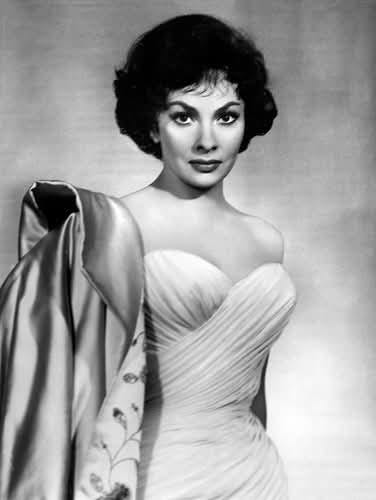
It was a seven-year contract that effectively banned her from working in Hollywood unless she worked exclusively for Hughes.
Any studio wanting to hire her would face lawsuits and unreasonable licensing fees. The contract gave Hughes total control over her American film career.
It was a trap designed to force submission: work for me on my terms, or don’t work at all.
“I couldn’t return to Hollywood without Howard Hughes filing a lawsuit,” Gina recalled decades later. “He said I was his property.”
Most actresses of that era would have been destroyed. The powerful men of Hollywood expected submission. They expected women to break, to compromise, to accept powerlessness in exchange for a chance at stardom.
But Gina Lollobrigida was nobody’s property.
She did something Hughes never anticipated:
She studied the contract. And she found the loopholes.
The contract prevented her from working in American films shot in the United States but it said nothing about American films shot in Europe.
Nothing about European studios.
Nothing about building an international career beyond Hughes’s reach.
So that’s exactly what she did.
1953: She starred in “Beat the Devil” alongside Humphrey Bogart. An American production, filmed in Italy, outside Hughes’s jurisdiction.
That same year: International sensation in “Bread, Love and Dreams,” earning a BAFTA nomination.
1956: “Trapeze” with Burt Lancaster and Tony Curtis. Shot in Paris, beyond Hughes’s control.
While Hughes tried to cage her in Los Angeles, Gina built an empire across Europe on her own terms.
She designed her own costumes. Did her own makeup. Negotiated her own contracts with European studios, sometimes pricing herself out of roles rather than accepting less than she deserved.
“I am an expert on Gina,” she declared. A revolutionary statement of autonomy in an industry designed to make women dependent on men’s approval.
By 1959, Gina Lollobrigida was such a massive international star that when MGM desperately wanted her for “Never So Few” opposite Frank Sinatra, shot in the United States, they were forced to pay Hughes $75,000 just to placate him, on top of her substantial salary.
Hughes tried to own her.
Instead, she made herself so valuable that studios paid him ransoms just for the privilege of her presence.
She had won.
Even after Hughes sold RKO Pictures in 1955, he kept her contract. Not for business, but for control, for spite, for the satisfaction of technically owning a piece of her career.
But by then? It didn’t matter.
She’d already conquered international cinema without surrendering anything.
Three David di Donatello Awards (Italy’s highest film honor). A Golden Globe. International stardom across Europe. She acted fluently in Italian, French, and English, commanding her own image in an era when women were told to be grateful for scraps.
And then, at the height of her fame, she did something even more revolutionary.
She walked away.

By the late 1960s and early 1970s, Gina Lollobrigida began pursuing a second career as a photojournalist.
The woman Hollywood tried to reduce to property was now photographing world leaders, artists, and icons on her own terms: Paul Newman, Salvador Dalí, Henry Kissinger, Audrey Hepburn, Ella Fitzgerald.
In 1974, she achieved what many professional journalists couldn’t: exclusive access to Fidel Castro for an in-depth interview and documentary.
The actress trapped by America’s most powerful producer was now interviewing one of the world’s most powerful political leaders.
She became an accomplished sculptor, her work exhibited internationally.
France awarded her the Légion d’honneur, one of the nation’s highest honors, for her artistic achievements beyond film.
In 2013, at age 86, she sold her jewelry collection and donated nearly $5 million to stem-cell research.
Gina Lollobrigida died on January 16, 2023, at age 95. One of the last surviving stars of Hollywood’s Golden Age.
She outlived Howard Hughes by 47 years.
She never needed Hughes’s millions or Hollywood’s approval.
She never compromised her marriage, her dignity, or her autonomy for fame.
She built something far more valuable than stardom: a life lived entirely on her own terms.
Her story is a masterclass in power and resistance:
When they try to own you, find the loopholes.
When they block your path, build new roads in places they don’t control.
When you’ve conquered their world, have the courage to walk away and build something better.
Howard Hughes thought he could control Gina Lollobrigida with a seven-year contract designed to break her will.
Instead, she proved that the most powerful act of defiance isn’t breaking the chains, it’s proving you were never truly bound in the first place.
She outsmarted him.
She outworked him.
She outlasted him.
She outlived him.
And she did it all while staying married to the man she chose, refusing every bribe and threat, building multiple careers, and giving away millions to causes she believed in.
That’s not just survival.
That’s triumph.
Wow! What a powerful testimony.
I can't explain this, but the Spirit of the Lord came on my heavy as I neared the end of reading this powerful tribute to Gina.